
Fugitive Emission Test (FET)
Our FET systems are designed with precision, ensuring your valves meet the strictest emission standards while maintaining operational efficiency.
Overview
The Fugitive Emission Test (FET) is a specialized testing system designed to evaluate the leakage performance of valves and components, ensuring they meet strict environmental and safety regulations. This test is critical for minimizing harmful emissions in industries handling hazardous substances, safeguarding both the environment and operational safety.
The industrial landscape is one such domain that faces numerous unprecedented challenges. A microscopic leak can lead to serious operational and regulatory failures. Especially in sectors where there is a high-pressure gas operation every day.
Fugitive emission testing stands as a frontline defence to detect any such unintended gas or vapour leak and address it before it escalates into a bigger issue.
Product Range
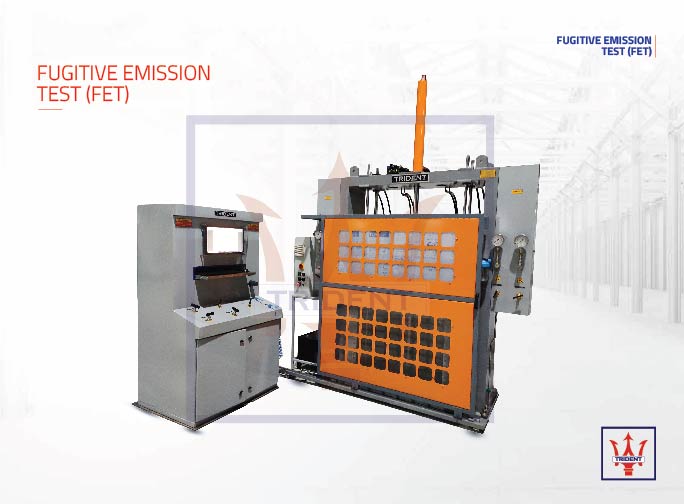
Key Features:
- Advanced Leak Detection: Precisely measures emissions of volatile organic compounds (VOCs) and other gases under simulated operating conditions.
- Compliance with Standards: Meets global standards such as ISO 15848, API 641, and EPA Method 21, ensuring regulatory adherence.
- Customizable Test Configurations: Supports testing across a variety of valve types, sizes, and materials to suit industry-specific requirements.
- High-Precision Sensors: Utilizes cutting-edge sensors for accurate detection of low-level emissions.
- Data Monitoring and Reporting: Equipped with real-time data acquisition systems and comprehensive reporting tools for traceability and analysis.
- Robust and Reliable: Built with durable materials to withstand high pressures and challenging test conditions.
- Safety Integration: Includes safety features such as gas containment systems and emergency shut-off controls for operator protection.
What is Fugitive emission testing?
Fugitive emissions represent unintended leaks of gas, vapour or particulate from pressurised industrial equipment. Unlike emissions from controlled exhaust or vent, these emissions operate in shadow and occur from weak points such as worn seals, valves, flanges or compressor components.
Such emissions carry serious environmental implications by contributing to air pollution and greenhouse gas buildup. Not just that, these leaks threaten operational safety and endanger workplace safety. In addition, every leak is lost product, which directly undermines operational efficiency over time.
To combat this critical concern, fugitive emission testing plays a vital role by identifying and quantifying these unintended releases by mimicking a real-world scenario.
What is Fugitive emission testing?
The significance of fugitive emission testing encompasses some critical aspects, such as
- Environmental impact: It is one of the visible concerns of fugitive emissions. This emission substantially degrades air quality and drives climate change. Especially, the methane gas from oil and gas operations has a more potent effect on ground-level ozone formation and thus increases global warming. Also, this uncontrolled release poses a serious effect on the public health of the surrounding community.
- Regulatory compliance: compulsory regulation is one of the major reasons industries highlight fugitive emission testing. Failing to comply often results in carrying a high penalty. More than just avoiding fines, adhering to these protocols safeguards the enterprise’s reputation and keeps the operation licence and permit intact.
- Economic loss: From a business standpoint, fugitive emissions directly mean financial loss. On its own, a small leak may appear trivial, but the cumulative effect of it amounts to millions. Regular systematic testing can early detect the problem and avoid large-scale failure and expensive repair.
- Safety hazards: when safety is on the line, fugitive emission testing is mandatory, especially the plants that deal with flammables and toxic materials demand testing as an indispensable process. Undetected fugitive emissions can potentially lead to explosive conditions and expose workers to harmful chemicals.
Benefits of regular fugitive emission testing
Although the regulatory compliance prompts the initial implementation, the fugitive emission testing has broader operational benefits. Detecting leaks early stops the major operational disruption and minimises maintenance cost and machine downtime.
Another key advantage is enhanced safety. Many fugitive emissions contain hazardous and combustible gases; timely detection is critical to prevent harm and safeguard the workers.
Frequently Asked Questions (FAQs)
1. What exactly is fugitive emission?
Fugitive emissions represent unintended leaks of gas, vapour or particulate from pressurised industrial equipment. These emissions operate in shadow and occur from weak points such as worn seals, valves, flanges or compressor components.
2. Why is fugitive emission testing important for industries?
Fugitive emission testing is predominant for multiple reasons. It prevents air pollution, ensures workplace safety, reduces product loss and supports regulatory compliance.
3. Which industries are most affected by fugitive emissions?
The most affected industries include oil and gas, chemical manufacturing, petrol refineries, power generation, and natural gas processing facilities.
4. What are the most common sources of fugitive emissions in a plant?
Common emission sources include valve stems, flange connections, pump seals, compressors and storage tank fittings.
5. How is fugitive emission testing performed?
Depending on the application and required standards, fugitive emission testing is performed by systematic inspection using specialized equipment.
Fugitive emission testing is a proactive strategy for operational safety and environmental stewardship. Industries consider investing in effective testing for smooth operation.